O-Ring failures aren’t caused by the wrong material – they’re caused by incorrect sizing or improper installation. One of the most overlooked parameters is allowable stretch: get it wrong, and you’re looking at leakage, premature failure, or unnecessary downtime.
At Techno Ad, we’ve seen this pattern repeat across industries. The fix is rarely a material upgrade – it’s getting the numbers right from the start.
This guide walks you through sizing an O-Ring correctly and the stretch limits to respect during installation, so your seal performs the first time and every time after.
What Is an O-Ring and Why Does It Matter?
An O-Ring is a toroidal (doughnut-shaped) elastomeric seal designed to sit in a groove and form a seal between two mating surfaces when compressed. O-Rings are versatile and found in virtually every industry, from hydraulics and pneumatics to medical devices and waterworks, because they provide effective sealing in both static and dynamic applications.
At Techno Ad, we supply a wide range of O-Rings in standard sizes (AS568, ISO 3601, BS, JIS) and custom dimensions, in materials such as NBR, EPDM, FKM (Viton™), FFKM, HNBR, PTFE, and more. Our catalog covers thousands of sizes and compounds tailored to different application requirements.
Allowable Stretch: A Critical Installation Parameter for Radial Sealing
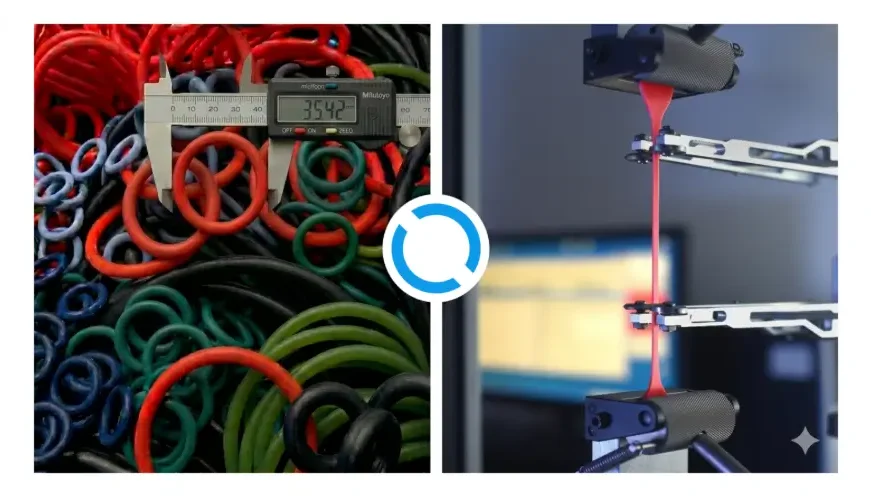
When installing an O-Ring onto a shaft or into a gland, it may need to be stretched slightly to fit. However, this must be controlled since overstretching can thin the cross-section, weaken the seal, and lead to leakage or early failure.
Industry guidelines generally recommend that O-Ring stretch (the increase in O-Ring inner diameter when installed relative to its relaxed state) remain within conservative limits:
- Static applications: up to ~5% ID stretch
- Dynamic applications: typically 1–3% ID stretch
If stretch exceeds these ranges, the O-Ring cross-section decreases significantly, reducing sealing effectiveness and increasing the risk of mechanical damage during installation.
Why Stretch Matters
- Excessive stretch reduces the cross-sectional thickness of the O-Ring, lowering contact pressure in the gland.
- It increases the risk of micro-cracking, tearing, or extrusion under pressure.
- It can lead to uneven compression and reduced sealing life.
A practical rule of thumb: if you have to “pull hard” to fit the O-Ring on a shaft, the size is probably incorrect. It’s better to adjust the O-Ring inside diameter and groove geometry than risk overstretching.
Different elastomers have varied elongation and mechanical properties. Overstretching an O-Ring, especially in fluorocarbon materials like FKM, can lead to reduced contact pressure, increased compression set, and possible permanent deformation that undermines the seal. That’s why staying within recommended limits is a basic but crucial engineering requirement.
Squeeze, Gland Fill, and Stretch – Must Be Considered Together
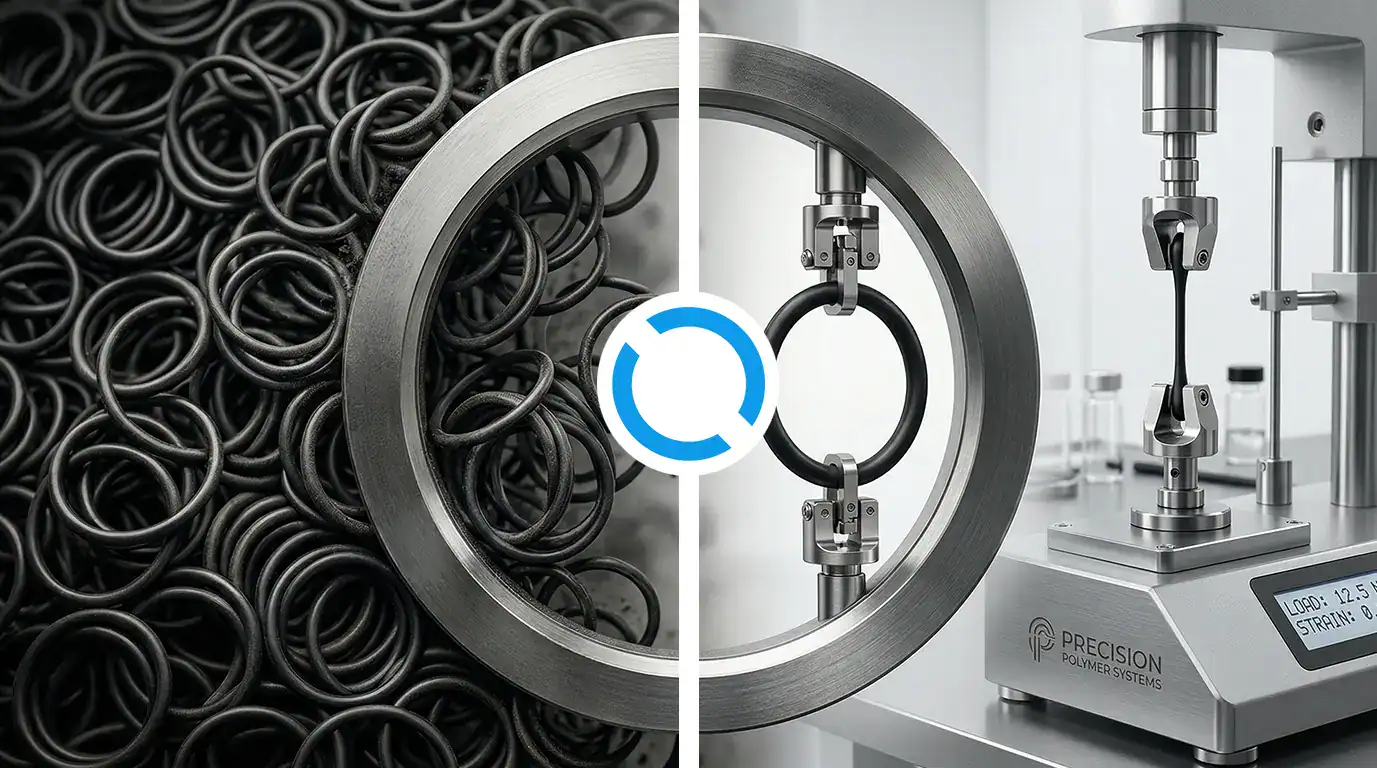
Allowable stretch should never be evaluated in isolation. Proper O-Ring performance depends on the combined relationship between squeeze, gland fill, and stretch.
Squeeze (Cross-Section Compression)
The cross-section determines how much the O-Ring compresses once inserted into its gland. Proper squeeze ensures the O-Ring creates sufficient sealing force without excessive wear.
- Static seals: typical squeeze range is ~20–30% of the cross-section
- Dynamic seals: typical squeeze range is ~10–20%
Too little squeeze can lead to leakage; too much squeeze increases friction, wear, and compression set.
Gland Fill (Volume Fill)
Gland fill refers to how much of the available groove volume is occupied by the O-Ring once installed and compressed.
Excessive gland fill can cause extrusion, high friction, or premature failure, especially at elevated temperatures.
Stretch (ID Stretch)
Stretch directly affects the O-Ring’s effective cross-section and therefore interacts strongly with squeeze and gland fill. An overstretched O-Ring may appear acceptable dimensionally but fail prematurely under real operating conditions.
Quick Rules of Thumb
For common radial sealing applications:
Static applications:
Dynamic applications:
These guidelines help balance sealing force, friction, durability, and long-term reliability.
Application Conditions
Always consider the operating environment:
- Static vs. dynamic sealing: Dynamic applications (e.g., rotating shafts) require tighter stretch limits and lower squeeze to minimize wear.
- Temperature range: High temperatures reduce elastomer strength and increase thermal expansion; materials like FKM and FFKM handle heat better than NBR or EPDM.
- Fluid or chemical compatibility: The material must resist the media it contacts, from water and fuels to aggressive chemicals.
Material Selection: Match Your Application
An O-Ring’s performance is only as good as the material it’s made from. Temperature tolerance, chemical resistance, and compression set behavior vary widely across elastomer types:
- NBR – Acrylonitrile butadiene (Buna-N)
- HNBR – Hydrogenated nitrile
- XNBR – Carbonylated nitrile
- NBR/PVC – Nitrile/PVC blends
- EPDM – Ethylene Propylene Diene rubber
- CR – Neoprene (Polychloroprene)
- VMQ – Silicone rubber
- FVMQ – Fluorosilicone
- AU / EU – Polyurethane
- FKM – Fluorocarbon rubber
- FFKM – Perfluoroelastomer
- Teflon®-FEP/PFA
- FEPM (Aflas®)
Selecting the right compound before finalizing dimensions is a key engineering decision that directly impacts service life.
https://www.technoad.com/engineering/materials/
Conclusion
- Keep allowable O-Ring stretch within recommended limits (≤5% static, 1–3% dynamic).
- Always evaluate stretch, squeeze, and gland fill together and never in isolation.
- Choose the correct ID, cross-section, and material based on operating conditions.
- Avoid overstretch to maximize sealing reliability and service life.
Leverage Techno Ad’s product range and engineering expertise for optimal sealing solutions.
Engineering Support & Custom Solutions from Techno Ad
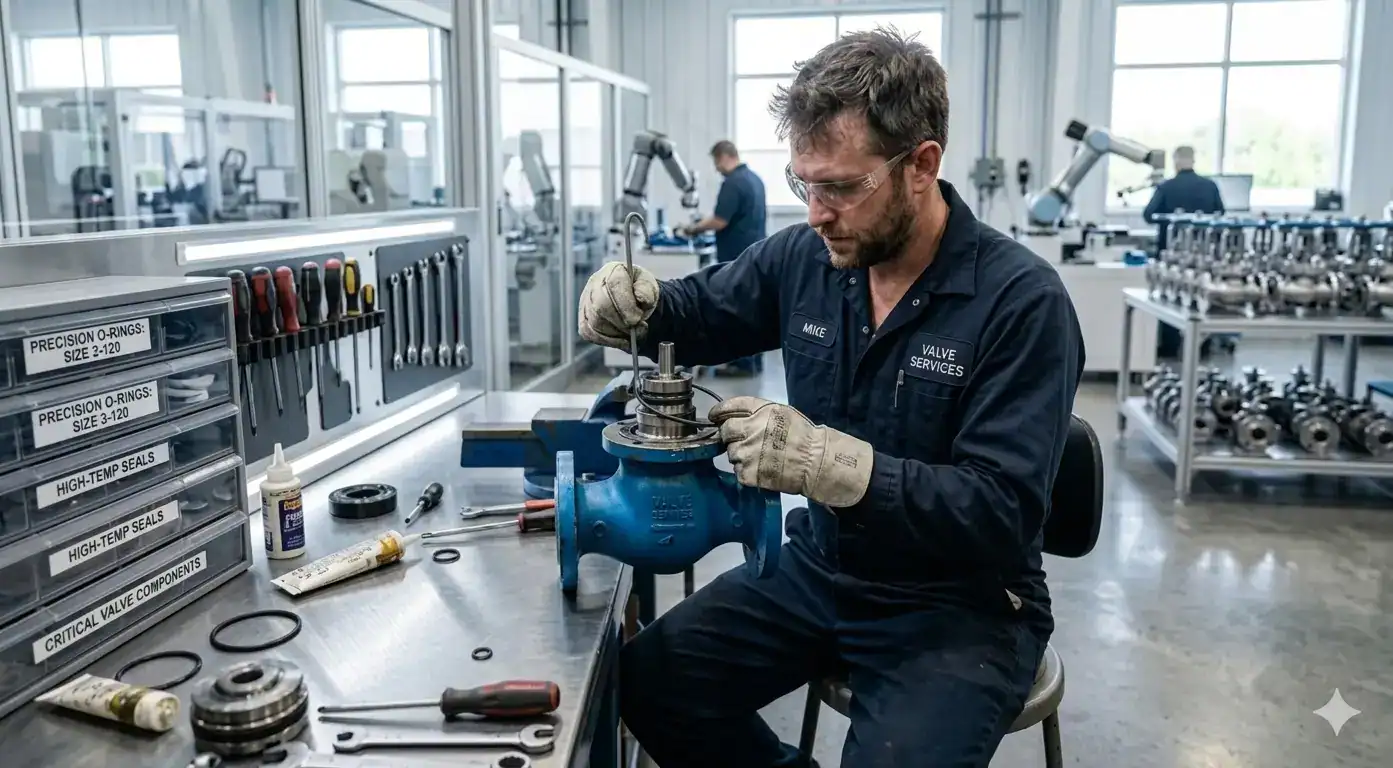
Choosing the correct O-Ring in terms of size, material, and installation practice is a foundational engineering task that directly influences equipment reliability, maintenance intervals, and safety.
At Techno Ad, we don’t just supply seals; we partner with engineers and designers to ensure every solution meets your specific needs. From standard components to custom-engineered shapes, materials, and certifications (including FDA and military specifications), we support your project from concept to production.
Need help selecting the right O-Ring for your application? Contact our engineering team with your drawings and operating conditions – we’re here to advise and support your success.